[OIL PRICES] Markets ignore Saudi oil concession

Saudi Arabia's offer of a further increase in production to halt the oil price spiral failed to have any impact yesterday on markets more preoccupied with the shutdown of a North Sea oil and gas field, the weakness of the dollar and the renewed surge in product prices.

Futures contracts in New York hit a new intra-day peak of $139.89 a barrel at one stage, before closing down 25 cents at $134.61, while North Sea Brent jumped more than $2.40 to $137.52 in London, on the back of the Statoil decision to cut output from the Oseberg field by 150,000 barrels a day follow

  • More on oil
Sterling jumped to its highest level for two weeks on a trade weighted basis in anticipation that the Bank of England's Monetary Policy Committee will be pressured into increasing interest rates because of inflation worries, while the dollar continued to lose ground against the euro.

Figures out today are expected to show consumer price inflation in Britain is running at an annual rate of 3.1pc, well above the 2pc target level agreed with government. Mervyn King, Governor of the Bank, will have to write what analysts feel will be first of a series of letters to the Chancellor explaining why the target has been missed.

Saudi Arabia's decision to increase production by another 500,000 barrels a day followed a meeting with Ban Ki-moon, the United Nations secretary-general, in Jeddah. The increase, the second in a month, will push Saudi output to 9.7m daily barrels and comes as Saudi prepares for a meeting of oil producers and consumer governments in Jeddah to try to put a brake on rising prices.

Malcolm Wicks, energy minister, welcomed the Saudi decision but failed to get the United Arab Emirates to follow suit.


Source: The Telegraph|By Roland Gribben

[OIL PRICES] Crude Oil Drops for a Third Day Amid Economic Slowdown Concern

Crude oil declined for a third day amid concerns that slower economic growth will curb consumption of oil products.

Oil has retreated more than $7 from yesterday's record of $139.89 a barrel. German investor confidence dropped to the lowest in more than 15 years in June as surging inflation hit Europe's largest economy. The U.K. inflation rate rose to the highest since at least 1997 in May, paving the way for higher interest rates.

``Worries about economic inflation on both sides of the Atlantic are bearish for oil,'' said Rob Laughlin, senior broker at MF Global Ltd. in London.

Crude oil for July delivery fell as much as $2.11, or 1.6 percent, to $132.50 a barrel on the New York Mercantile Exchange and traded at $132.92 at 12:31 p.m. London time. Yesterday, the contract touched a record $139.89.

StatoilHydro ASA, Norway's largest oil and natural-gas producer, said its North Sea Oseberg field may resume operations this week after a fire on platform A halted production June 15.

Brent crude oil for August settlement was at $132.78 a barrel, $1.93 lower, on London's ICE Futures Europe Exchange at 11:29 a.m. local time. Prices reached a record $139.32 a barrel yesterday.

Saudi Arabia, hosting a forum in Jeddah this weekend to address the impact of record prices on importers, will raise output 200,000 barrels to 9.7 million barrels a day next month, King Abdullah told United Nations Secretary-General Ban Ki-Moon, according to a UN spokesman.

`Moving Supply'
``With the pressure OPEC has seen from the Western world that they need to respond, they've been taking the tack that demand is strong,'' said Mark Pervan, a commodity strategist at Australia & New Zealand Banking Group Ltd. in Melbourne. ``That gives them a reason to start moving supply upward.''

The kingdom has called a meeting in Jeddah on June 22 to help stabilize prices. Crude oil fell 2.7 percent in New York last week as Saudi Oil Minister Ali al-Naimi described the surge in the commodity as ``unjustified'' and called a meeting of producers, major industrial nations and banks.

U.S. crude stockpiles probably dropped 1.5 million barrels in the week ended June 13 from 302.2 million barrels, according to a Bloomberg survey before tomorrow's Energy Department report. Gasoline stockpiles probably climbed 1 million barrels from 210.1 million barrels the prior week, according to the median of responses.

Source: Bloomberg|By Grant Smith

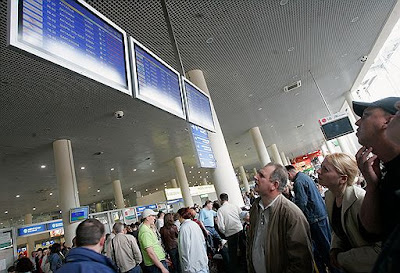
[RUSSIA] It Smells Kerosene

For the first time in Russia, the cost of aviation kerosene at the country’s airports has exceeded the world level. The average price for the kerosene in Europe has lowered 8 percent since May, but the prices in Russia that were fixed in early June stand still, driving up the prices for charter flights.

The prices for aviation kerosene have doubled since the summer of 2007. In foreign airports, however, the decline started in May, but the trend hasn’t extended to Russia. As a result, in London Heathrow Airport, the kerosene costs 6.2 percent less than in Moscow and the price is 8.1 percent less in Dubai.

The difference in prices could be attributed to the market control over the prices. “On a free market, the price is the subject of bargaining between a seller and a buyer, while here, the price is fixed by the manufacturer with no other limits but for the psychological tolerance,” said TOAP owner Evgeny Ostrovsky. TOAP is the biggest independent wholesale supplier of aviation kerosene.

Unlike western markets, the cost of aviation kerosene here is fixed once a month. So if the global trend proves stable, Russia’s prices will probably go down as well,” said Pavel Strokov, who is the promotion and marketing director at KORTES Information Center. Regardless, the prices for aviation kerosene are tied to the oil prices and those prices continue to increase, Strokov pointed out.
Russia, London Heathrow Airport, kerosene, TOAP, KORTES, Pavel Strokov,Evgeny Ostrovsky
Source: Kommersant